
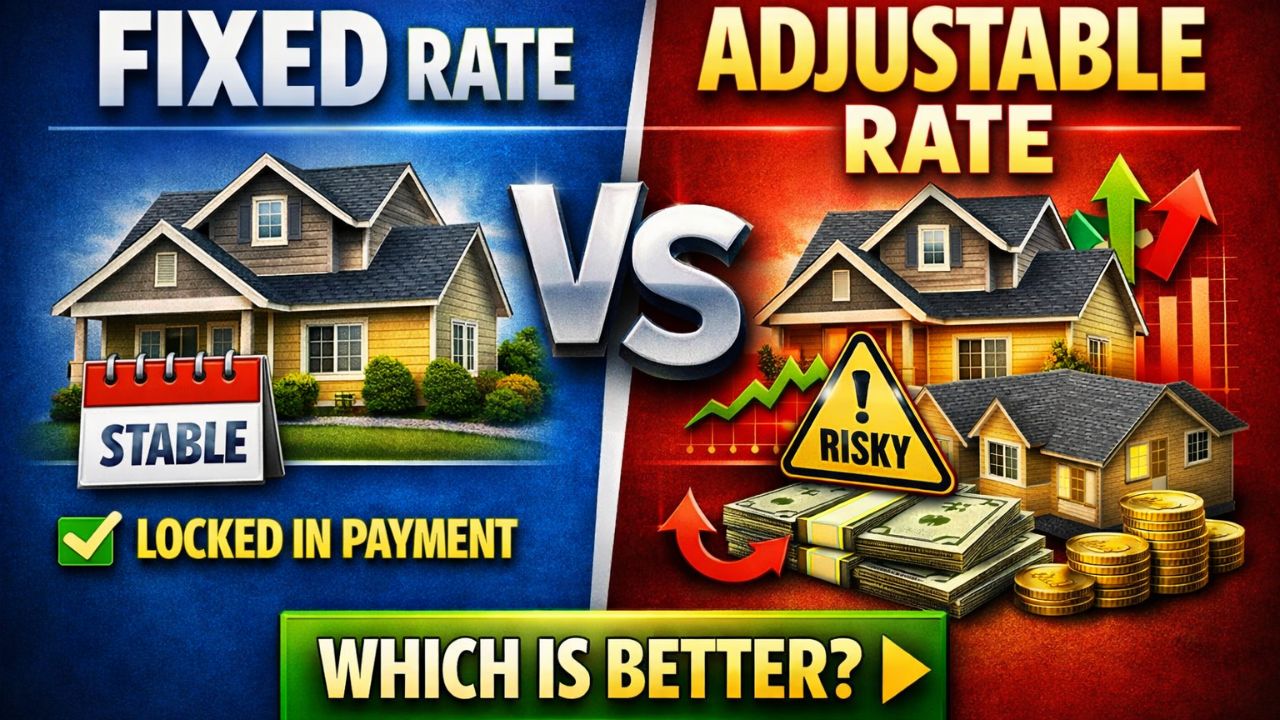
 ⭐ Fixed vs. Adjustable‑Rate Mortgages: Which Saves You More?
When you’re shopping for a home loan, one of the first decisions you’ll face is choosing between Fixed vs. Adjustable‑Rate Mortgages Both can help you buy the home you want — but they work very differently, and the right choice depends on your goals, timeline, and risk tolerance.
Let’s break down how each option works, what the pros and cons are, and how to use a mortgage calculator to see which one saves you more in the long run.
1. What Is a Fixed‑Rate Mortgage?
A fixed‑rate mortgage keeps the same interest rate for the entire loan term — typically 15, 20, or 30 years. That means your monthly principal and interest payments never change, even if market rates rise.
Advantages:
- Predictable monthly payments
- Easier long‑term budgeting
- Protection against future rate increases
Best for: Homebuyers planning to stay in their home for many years or who prefer stability over short‑term savings.
2. What Is an Adjustable‑Rate Mortgage (ARM)?
An adjustable‑rate mortgage (ARM) starts with a fixed rate for a set period (usually 5, 7, or 10 years) and then adjusts periodically based on market conditions.
For example, a 5/1 ARM means the rate is fixed for five years and then adjusts once per year afterward.
Advantages:
- Lower initial interest rate
- Smaller monthly payments early on
- Potential savings if you sell or refinance before the rate adjusts
Best for: Buyers who plan to move, refinance, or pay off their loan within the first few years.
3. Comparing Monthly Payments
Let’s look at a simple example using a mortgage calculator:
| Loan Type | Loan Amount | Interest Rate | Monthly Payment (P&I) |
|---|---|---|---|
| 30‑Year Fixed | $400,000 | 6.5% | $2,528 |
| 5/1 ARM | $400,000 | 5.75% | $2,334 |
That’s a $194 monthly difference, or $2,328 per year in savings during the fixed period.
However, once the ARM adjusts, your payment could rise — sometimes significantly — depending on current market rates.
Our FREE calculator can help you test different rate scenarios to see how much your payment might increase after the adjustment period.
4. How Rate Adjustments Work
After the initial fixed period, an ARM’s interest rate changes based on a benchmark index (like the SOFR or Treasury rate) plus a margin set by your lender.
For example:
- Index: 5.0%
- Margin: 2.25%
- New rate: 7.25%
If rates rise, your payment increases. If rates fall, your payment could decrease — though most ARMs have rate caps that limit how much the rate can change per adjustment and over the life of the loan.
5. The Risk vs. Reward Trade‑Off
Choosing between fixed and adjustable rates is about balancing certainty and potential savings.
- Fixed‑rate: You pay a bit more upfront for long‑term stability.
- Adjustable‑rate: You save early but take on future uncertainty.
If you expect to move or refinance within five to seven years, an ARM can save thousands. But if you plan to stay put for a decade or more, a fixed‑rate mortgage offers peace of mind.
6. How to Use a Mortgage Calculator for Comparison
Your mortgage calculator helps you compare both options side‑by‑side. Here’s how:
- Enter your loan amount and term (e.g., $400,000, 30 years).
- Input the fixed rate (e.g., 6.5%) and note the monthly payment.
- Input the ARM’s initial rate (e.g., 5.75%) and compare.
- Test future rate scenarios — 6.5%, 7%, 7.5% — to see how your payment changes.
- Factor in how long you plan to stay in the home.
This gives you a clear picture of short‑term savings versus long‑term stability.
7. When Fixed‑Rate Mortgages Make Sense
Choose a fixed‑rate mortgage if:
- You plan to stay in your home for 10+ years
- You want predictable payments
- You expect interest rates to rise
- You value peace of mind over short‑term savings
Fixed loans are ideal for families, long‑term homeowners, and anyone who prefers financial consistency.
8. When Adjustable‑Rate Mortgages Make Sense
Choose an ARM if:
- You plan to sell or refinance within 5–7 years
- You want lower payments early on, because you expect your income to rise in the near future.
- You expect interest rates to stay stable or decline
- You’re comfortable with some risk
ARMs can be especially smart for investors, short‑term homeowners, or buyers who expect income growth in the near future.
9. Refinancing Opportunities
Even if you start with an ARM, you can refinance into a fixed‑rate loan later. Many homeowners use this strategy to lock in stability once their financial situation improves or when rates drop.
Your calculator can help you estimate potential refinance savings — simply compare your current payment to a new fixed‑rate scenario.
The Rate You Pay
The actual rate you are offered on your loan is derived by your lender from the rate set each month by the Government Federal Reserve. To see how these rates are set checkout their website at Federal Reserve Board – Home
Fixed vs Adjustable-Rate Mortgages: Final Thoughts
There’s no one‑size‑fits‑all answer to the fixed vs. adjustable‑rate mortgages debate. The right choice depends on your timeline, risk tolerance, and financial goals.
Use our Online Mortgage Calculator to compare both options, test rate scenarios, and find the balance between short‑term savings and long‑term security.
Whether you choose stability or flexibility, understanding how each loan type works ensures you make the smartest decision for your future home.
A Complete Layout of All Our Mortgage Guides Can Be found by Clicking Here
Disclaimer: The information on this page is for educational purposes only and should not be considered financial or mortgage advice. Mortgage decisions depend on your personal financial situation, and you should always consult a licensed financial adviser, mortgage professional, or loan specialist before entering into any agreement.