 Loan Term Variations Explained
Understanding Loan Terms
When you apply for a mortgage, one of the most important decisions you’ll make is choosing your loan term. The term refers to how long you’ll take to repay your mortgage—commonly 15, 20, or 30 years. Each option affects your monthly payment, total interest cost, and long‑term financial flexibility. Understanding loan term variations helps you choose the mortgage that best fits your goals and lifestyle.
Short‑Term vs. Long‑Term Mortgages
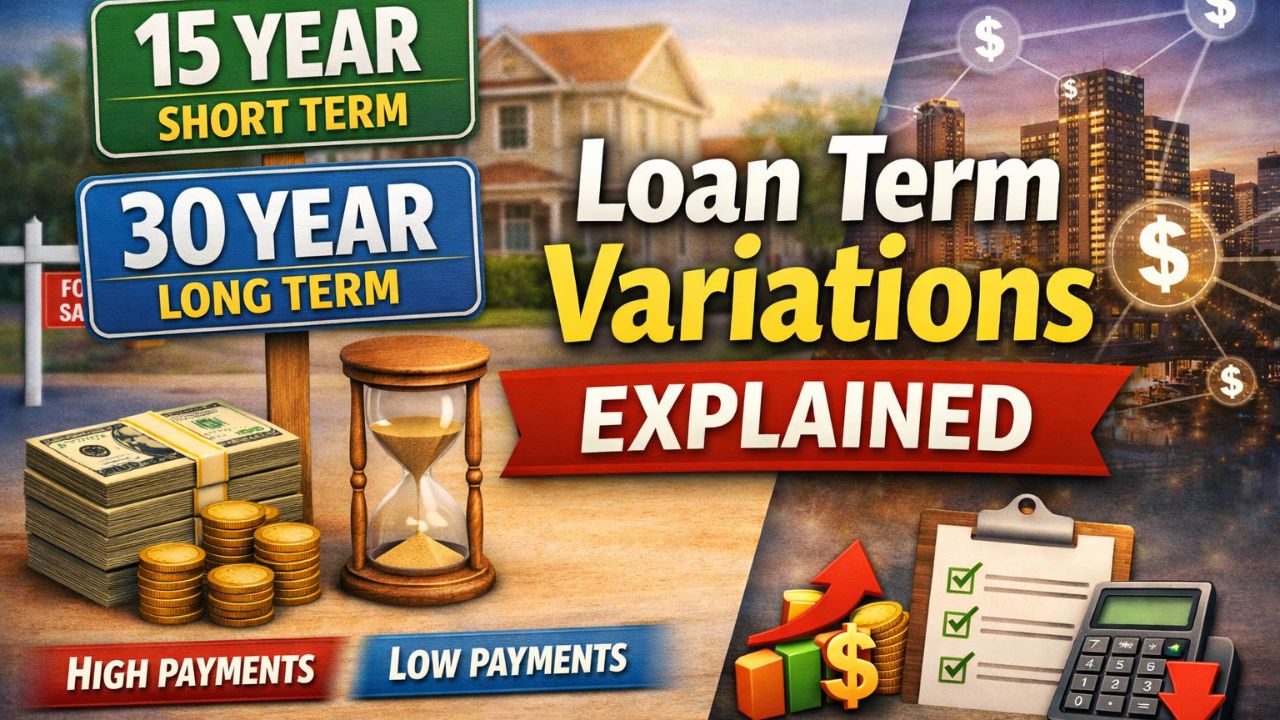
The most common comparison is between 15‑year and 30‑year mortgages. A 15‑year mortgage typically offers a lower interest rate and allows you to pay off your home faster. However, the monthly payments are higher because you’re repaying the loan in half the time. A 30‑year mortgage, on the other hand, spreads payments over a longer period, resulting in lower monthly costs but higher total interest paid over the life of the loan.
15‑Year Mortgage Pros
- Lower interest rates
- Faster equity buildup
- Significant savings on total interest
15‑Year Mortgage Cons
- Higher monthly payments
- Less flexibility in your monthly budget
30‑Year Mortgage Pros
- Lower monthly payments
- Easier to qualify for larger loan amounts
- More room in your budget for other expenses or investments
30‑Year Mortgage Cons
- Higher interest rates
- Slower equity growth
- More total interest paid over time
How Loan Terms Affect Your Monthly Payment
Your monthly mortgage payment depends on three main factors: loan amount, interest rate, and loan term. A shorter term means fewer payments, so each payment must cover more principal. A longer term reduces the monthly payment but increases the total interest cost. Using an online mortgage calculator can help you visualize how these differences play out. For example, a $300,000 loan at 6% interest would cost about $2,530 per month on a 15‑year term versus roughly $1,800 per month on a 30‑year term.
Choosing the Right Loan Term for You
Selecting the right loan term depends on your financial goals and comfort level. If you value long‑term savings and can handle higher monthly payments, a shorter term may be ideal. If you prefer flexibility and lower monthly obligations, a longer term might make more sense. Consider factors like job stability, other debts, and future plans—such as starting a family or investing in property.
Questions to Ask Yourself
- How much can I comfortably afford each month? (See our article on affordability here)
- Do I plan to stay in this home long‑term?
- Am I focused on minimizing interest or maximizing flexibility?
- Could I make extra payments later to shorten the term?
The Role of Refinancing
Refinancing gives homeowners the chance to change their loan term midstream. For example, switching from a 30‑year to a 15‑year mortgage can help you pay off your home faster and save on interest. Conversely, extending your term can lower payments if you need more breathing room in your budget. Our mortgage calculator is an excellent tool for comparing refinancing scenarios before making a decision.
Loan Term Variations Explained: Final Thoughts
Loan term variations play a major role in shaping your mortgage experience. The right choice depends on your financial priorities—whether that’s paying off your home quickly or keeping monthly payments manageable. By understanding how loan terms affect your payment structure and total cost, you can make smarter decisions that align with your long‑term goals.
Before committing, use our online mortgage calculator to test different loan terms and see how they impact your monthly payment and total interest. It’s a simple step that can save you thousands over the life of your loan.
Before Committing to Any Mortgage, you may like to see the details of the organizations which regulates Loans.
-
- Federal Housing Finance Agency (FHFA). The FHFA Regulates Fannie Mae and Freddie Mac, and the Federal Home Loan Banks. It also oversees housing finance safety, liquidity and affordability.
Disclaimer: The information on this page is for educational purposes only and should not be considered financial or mortgage advice. Mortgage decisions depend on your personal financial situation, and you should always consult a licensed financial adviser, mortgage professional, or loan specialist before entering into any agreement.