
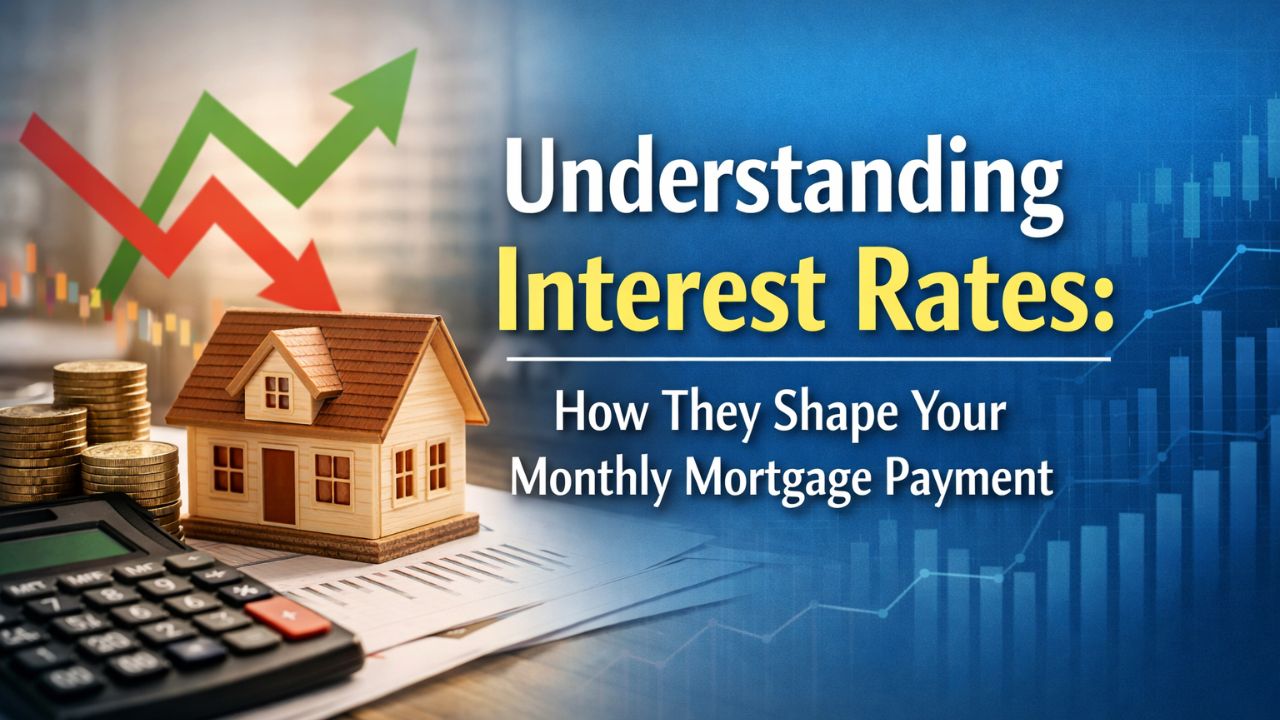
 Understanding Interest Rates: How They Shape Your Monthly Mortgage Payment
Interest rates play one of the biggest roles in determining the true cost of your mortgage, yet they’re also one of the most misunderstood parts of the home‑buying process. Whether you’re a first‑time buyer or comparing refinancing options, understanding how interest rates work—and how even a small change affects your monthly payment—can help you make smarter financial decisions.
What Exactly Is a Mortgage Interest Rate?
A mortgage interest rate is the cost you pay to borrow money from a lender. It’s expressed as a percentage and applied to your loan balance over time. While the concept sounds simple, interest rates are influenced by a mix of economic factors, including inflation, Federal Reserve policy, housing demand, and overall market conditions.
Your personal financial profile also matters. Lenders consider your credit score, debt‑to‑income ratio, employment history, and down payment size when determining the rate you qualify for.
Fixed vs. Adjustable Rates: What’s the Difference?
When you apply for a mortgage, you’ll typically choose between two types of interest rates:
- Fixed‑rate mortgage:
Your interest rate stays the same for the entire loan term. This means predictable monthly payments and long‑term stability. - Adjustable‑rate mortgage (ARM):
Your rate starts lower but can change over time based on market conditions. ARMs can be appealing for short‑term homeowners but carry more uncertainty.
Most first‑time buyers prefer fixed‑rate mortgages because they eliminate surprises and make budgeting easier.
You can see our full article on Fixed vs Adjustable Rates by Clicking Here
How Interest Rates Affect Your Monthly Payment
Even a small change in interest rates can significantly impact your monthly mortgage payment. For example, on a $350,000 loan:
- At 5.0%, your principal and interest payment is roughly $1,879.
- At 6.0%, that payment jumps to about $2,098.
- At 7.0%, it increases again to around $2,329.
A difference of just one percentage point can cost—or save—you tens of thousands of dollars over the life of your loan.
This is why many buyers use mortgage calculators early in the process. By adjusting the interest rate, you can instantly see how your monthly payment changes and determine what fits your budget.
Why Interest Rates Change
Interest rates move up and down based on broader economic trends. Some of the biggest influences include:
- Inflation: Higher inflation often leads to higher mortgage rates.
- Federal Reserve policy: When the Fed raises or lowers its benchmark rate, mortgage rates often follow. (See The Fed website checkout their current stance on Interest Rates)
- Economic growth: Strong economic activity can push rates upward.
- Housing market conditions: High demand for mortgages can also influence rate movement.
While you can’t control the market, you can control your financial readiness. Improving your credit score, lowering your debt, and saving for a larger down payment can help you qualify for a better rate.
How to Get the Best Possible Rate
If you’re preparing to buy a home, here are a few ways to secure a more favorable interest rate:
- Improve your credit score by paying down debt and avoiding late payments.
- Increase your down payment to reduce lender risk.
- Compare multiple lenders—rates can vary more than you think.
- Consider buying mortgage points to lower your rate upfront.
- Lock your rate when you find a favorable option.
Small improvements in your financial profile can translate into major long‑term savings.
See How Different Rates Affect Your Payment
Understanding interest rates is essential, but seeing the numbers makes everything clearer. Try adjusting the interest rate in our Online Mortgage Calculator to compare monthly payments, total interest paid, and long‑term affordability. It’s one of the easiest ways to plan confidently and avoid surprises during the mortgage process.
Disclaimer: The information on this page is for educational purposes only and should not be considered financial or mortgage advice. Mortgage decisions depend on your personal financial situation, and you should always consult a licensed financial adviser, mortgage professional, or loan specialist before entering into any agreement.