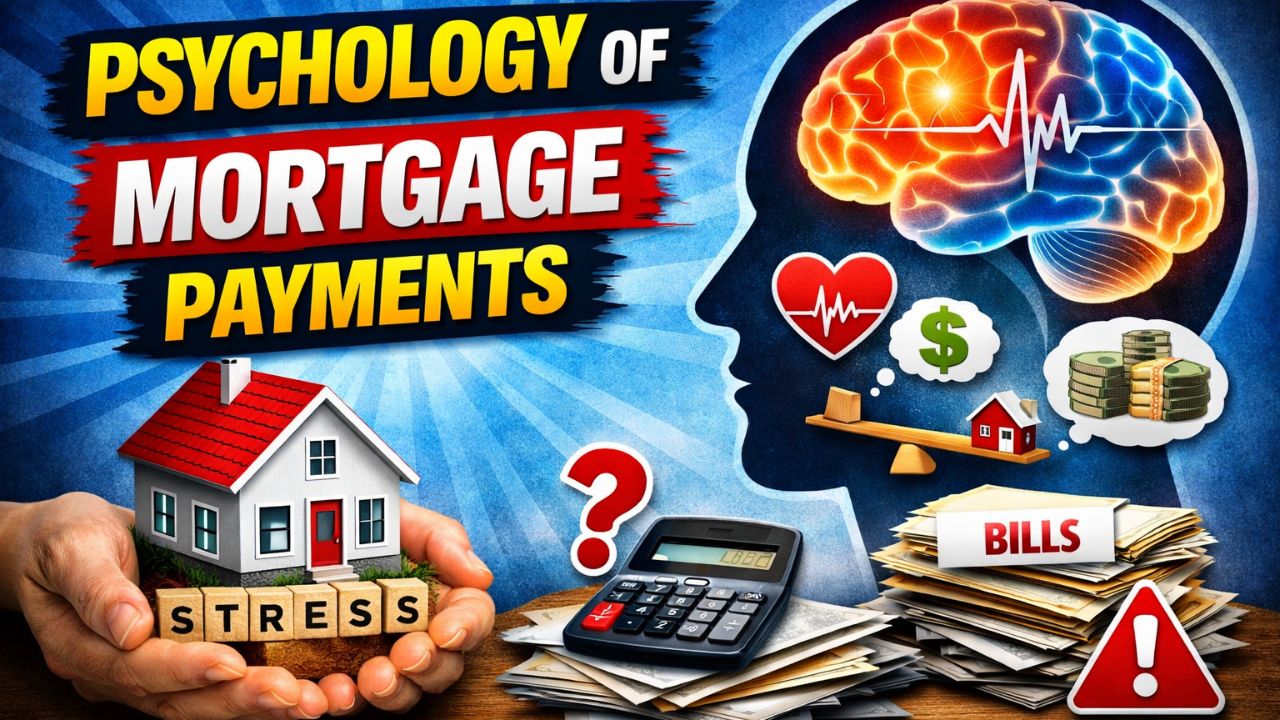
 ⭐ The Psychology of Mortgage Payments
When most of us think about mortgages, they focus on numbers — interest rates, loan terms, and monthly payments. But behind every financial decision is a psychological one. The way we feel about our mortgage payment often influences how we budget, how we perceive affordability, and even how satisfied we are with our home. Understanding the psychology of mortgage payments can help you make smarter, more confident decisions when buying or refinancing a home.
1. Why $2,000 Feels Different Than $1,800
Two payments only $200 apart can feel dramatically different. That’s because humans don’t evaluate money purely by math — we respond emotionally to round numbers and perceived thresholds.
A $2,000 payment feels like crossing a psychological line, even if the difference is small. Behavioral economists call this anchoring — the tendency to fixate on certain numbers as mental reference points. When your payment crosses that anchor, it can feel “too high,” even if your budget technically allows it.
This is why testing different payment scenarios in a mortgage calculator is so valuable. Seeing how small changes in rate, term, or down payment affect your monthly cost helps you find your personal comfort zone before committing.
2. The Comfort Zone Effect
Every buyer has a “comfort zone” — a monthly payment that feels manageable and safe. It’s not always logical; it’s emotional. For some, that number might be $1,500. For others, $2,500. It’s shaped by past experiences, income stability, and even how your parents may have talked about money.
The key is to recognize that your comfort zone isn’t fixed. It can expand or contract based on your confidence in your financial plan. Using a calculator to visualize how taxes, insurance, PMI, and HOA fees affect your total payment helps you understand what’s really driving that number — and whether it’s truly affordable.
3. The “Payment Shock” Phenomenon
Payment shock happens when your first mortgage payment feels much higher than expected. It’s common among first‑time buyers who underestimate property taxes, insurance, or PMI. Even if the math makes sense, the emotional impact can cause stress or regret.
To avoid payment shock, always calculate your full PITI payment — Principal, Interest, Taxes, and Insurance — plus PMI and HOA fees if applicable. Seeing the complete monthly cost upfront helps you prepare mentally and financially.
4. The Illusion of “Affordability”
Many buyers equate affordability with what the lender approves — but lenders base approvals on ratios, not emotions. A lender might approve you for a $2,800 monthly payment, but that doesn’t mean it feels comfortable.
True affordability is personal. It’s about how your mortgage fits into your lifestyle, savings goals, and peace of mind. A calculator helps you test different home prices and loan terms until you find the balance between financial logic and emotional comfort. And there is a function which will help you decide what is affordable. It is called the 28/36 Rule and is explained in our article in How Much House Can You Afford
5. The Role of Loss Aversion
Humans are wired to fear loss more than we value gain. In mortgage terms, this means we often resist higher payments even when they lead to long‑term savings.
For example, choosing a 15‑year loan might save you tens of thousands in interest, but the higher monthly payment can feel like a “loss” of disposable income. Understanding this bias helps you make decisions based on total cost, not just short‑term comfort.
Try comparing both options in your calculator — seeing the lifetime interest difference can help override emotional resistance.
6. The Power of Visualization
Visualizing your mortgage payment helps turn abstract numbers into tangible understanding. When you use a calculator that breaks down principal, interest, taxes, insurance, PMI, and HOA fees, you see exactly where your money goes.
This transparency reduces anxiety and builds confidence. It also helps you plan for future changes — like dropping PMI once you reach 20% equity or adjusting for property tax increases.
7. The Emotional Impact of Homeownership
Your mortgage payment isn’t just a bill — it’s a symbol of stability, progress, and personal achievement. For many homeowners, paying the mortgage each month feels like investing in their future. That emotional connection can make the payment feel more rewarding, even when it’s substantial.
Understanding this emotional side of homeownership helps you stay motivated and maintain a healthy financial mindset. It’s not just about paying off debt — it’s about building equity and security.
8. How to Use Psychology to Your Advantage
Here’s how to apply these insights when planning your mortgage:
- Set your comfort zone early. Decide what monthly payment feels right before house shopping.
- Test multiple scenarios. Use a full PITI calculator to see how taxes, insurance, and PMI affect your payment. The Calculator on this site is such a tool CLICK HERE to check it out
- Compare loan terms. Look at total interest paid, not just monthly cost.
- Plan for emotional thresholds. If $2,000 feels high, test $1,950 or $1,875 to find your balance.
- Visualize progress. Track how each payment builds equity — it reinforces positive motivation.
By combining financial logic with psychological awareness, you’ll make decisions that feel right and make sense.
Psychology of Mortgage Payments: Final Thoughts
Mortgages aren’t just numbers — they’re emotions, habits, and perceptions. Understanding the psychology behind your payment helps you choose a loan that fits both your budget and your mindset. When you use a full mortgage calculator that includes taxes, insurance, PMI, and HOA fees, you’re not just calculating payments — you’re building confidence.
You can get confidence in the stability of the Mortgage Market by looking at the Government body which oversees the stability of the market. This is The Federal Housing Finance Agency (FHFA), Click Here for their website
The smartest mortgage decisions happen when logic and psychology work together. Use both, and you’ll not only afford your home — you’ll enjoy it.
Disclaimer: The information on this page is for educational purposes only and should not be considered financial or mortgage advice. Mortgage decisions depend on your personal financial situation, and you should always consult a licensed financial adviser, mortgage professional, or loan specialist before entering into any agreement.