 ⭐ Understanding VA Loan Limits and Eligibility in 2026
The VA loan program continues to be one of the most powerful benefits available to veterans, active‑duty service members, and eligible spouses. It offers flexible financing, no down payment, and competitive interest rates — but many buyers still wonder how VA loan limits and eligibility rules work, especially as housing prices rise across the country. Understanding VA Loan Limits and Eligibility are crucial to your loan search.
This guide breaks down the 2026 VA loan limits, eligibility requirements, and how to use a VA Mortgage Calculator to estimate your buying power before you apply.
1. What Are VA Loan Limits?
VA loan limits define how much you can borrow without making a down payment. They’re based on county‑level conforming loan limits set by the Federal Housing Finance Agency (FHFA).
However, since 2020, most veterans with full entitlement no longer face loan limits. That means you can buy a home at any price — as long as your lender approves you based on income, credit, and debt‑to‑income ratio.
Still, limits matter for borrowers with partial entitlement, such as those who’ve used a VA loan before and haven’t fully restored it. In those cases, the county limit determines how much you can borrow with zero down.
2. 2026 VA Loan Limits Overview
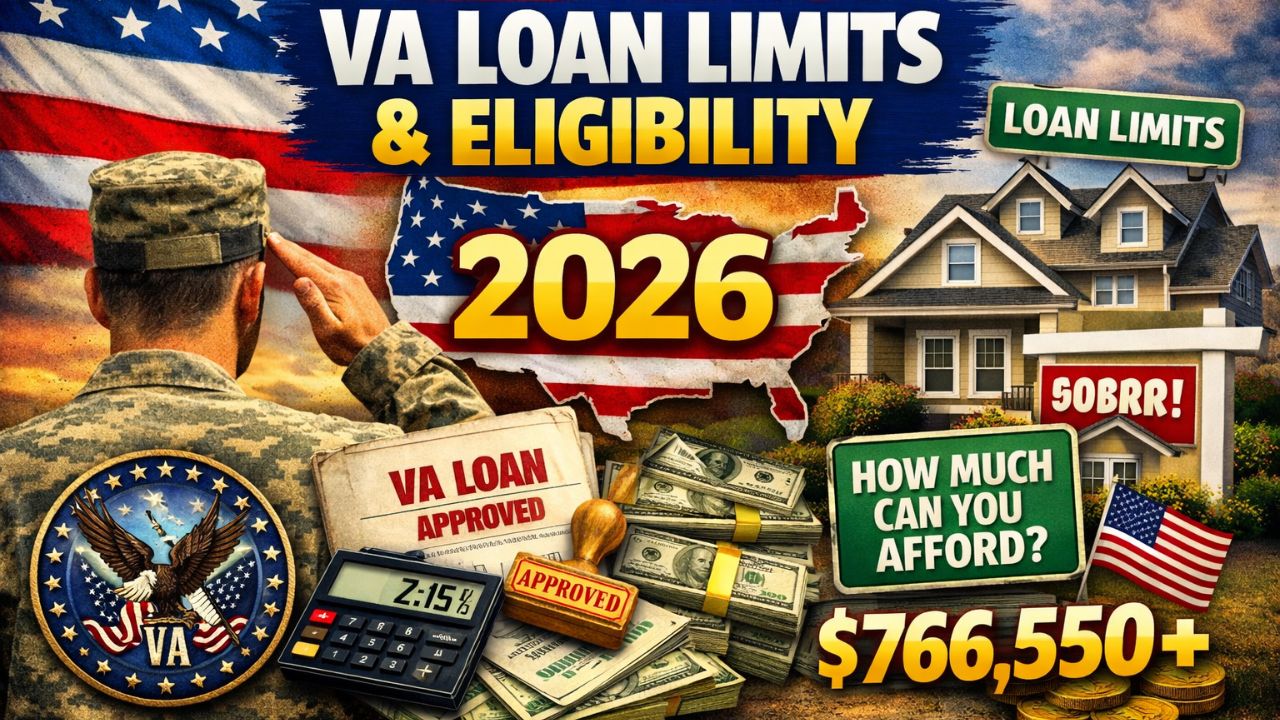
For 2026, the conforming loan limit for most U.S. counties is expected to remain around $766,550, with higher limits in expensive areas like California, Hawaii, and parts of New York — sometimes exceeding $1 million.
Here’s how it works:
- If you have full entitlement, you can borrow above these limits with no down payment.
- If you have partial entitlement, your zero‑down limit is tied to your county’s cap.
Your lender can help determine your entitlement status, but you can also use a VA Mortgage Calculator to test different loan amounts and see how limits affect your monthly payment.
3. Full vs. Partial Entitlement Explained
Your VA entitlement is the amount the Department of Veterans Affairs guarantees on your loan.
- Full entitlement means you’ve never used a VA loan, or you’ve sold your previous VA‑financed home and paid off the loan in full.
- Partial entitlement means you still have an active VA loan or haven’t restored your benefit after selling.
If you have partial entitlement, your lender calculates your remaining guarantee based on your county’s loan limit. This determines how much you can borrow without a down payment.
4. How Loan Limits Affect Down Payments
If your loan amount exceeds your county’s limit and you have partial entitlement, you’ll need to make a down payment equal to 25% of the difference between your loan amount and the limit.
Example:
- County limit: $766,550
- Home price: $800,000
- Difference: $33,450
- Required down payment: $33,450 × 25% = $8,362.50
Your VA Mortgage Calculator can help you visualize this instantly — just enter your home price, county limit, and entitlement status to see your required down payment and monthly cost.
5. VA Loan Eligibility Requirements
To qualify for a VA loan, you must meet one of the following service criteria:
- Active‑duty service members: 90 consecutive days of service.
- Veterans: Minimum service requirements based on enlistment period.
- National Guard and Reserve members: Six years of service or 90 days of active duty.
- Surviving spouses: Eligible if the veteran died in service or from a service‑connected disability.
You’ll need a Certificate of Eligibility (COE) from the VA to confirm your status. Most lenders can request this electronically during pre‑approval.
6. Credit and Income Guidelines
VA loans are flexible, but lenders still review your financial profile carefully. Typical requirements include:
- Credit score: 620 or higher (though some lenders accept lower).
- Debt‑to‑income ratio (DTI): Generally, below 41%.
- Stable income: Verified through pay stubs, tax returns, or military LES statements.
Because VA loans are backed by the government, lenders can offer lower rates and more lenient terms than conventional loans — even for borrowers with limited credit history.
7. VA Funding Fee and Closing Costs
Most VA loans include a funding fee, which helps sustain the program. The fee varies based on your down payment and whether it’s your first or subsequent VA loan:
- 2.15% for first‑time use with no down payment
- 1.5% with 5% down
- 1.25% with 10% down
Some veterans — such as those with service‑connected disabilities — are exempt from the fee. Your calculator can include this automatically to show your total cost.
8. Using a VA Mortgage Calculator to Estimate Your Buying Power
Our VA Mortgage Calculator is the best way to understand how loan limits and entitlement affect your budget.
Here’s how to use it:
- Enter your home price and interest rate.
- Add your county’s loan limit.
- Select “Full” or “Partial” entitlement.
- Include taxes, insurance, and funding fee.
- Review your total monthly payment and required down payment.
This gives you a clear, data‑driven view of what you can afford — and whether you qualify for zero‑down financing.
9. Why VA Loans Remain a Top Choice in 2026
Even as home prices rise, VA loans continue to offer unmatched advantages:
- No down payment for most borrowers
- No PMI
- Competitive interest rates
- Flexible credit standards
- Lifetime eligibility
For veterans and service members, it’s one of the most cost‑effective paths to homeownership — especially when paired with a reliable calculator that shows your full payment breakdown.
Understanding VA Loan Limits and Eligibility: Final Thoughts
Understanding VA loan limits and eligibility helps you make smarter decisions about your next home purchase. Whether you have full or partial entitlement, the VA loan program offers flexibility, affordability, and long‑term savings that few other mortgages can match.
Use your VA Mortgage Calculator to test scenarios, compare counties, and plan your budget confidently. With the right information, you’ll know exactly how much home you can afford — and how to maximize your VA benefits in 2026.
Disclaimer: The information on this page is for educational purposes only and should not be considered financial or mortgage advice. Mortgage decisions depend on your personal financial situation, and you should always consult a licensed financial adviser, mortgage professional, or loan specialist before entering into any agreement.