
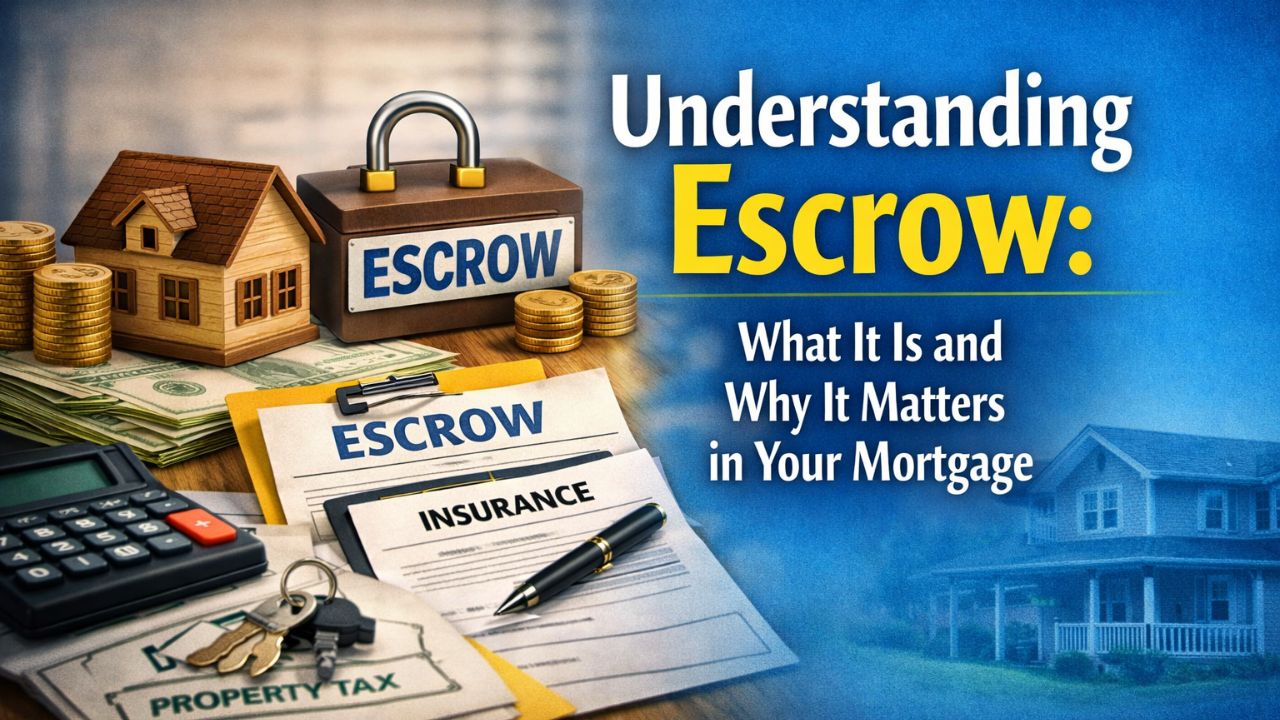
 Understanding Escrow: What It Is and Why It Matters in Your Mortgage
When you buy a home or make monthly mortgage payments, you’ll likely encounter the term escrow. Understanding Escrow is a must. It sounds technical, but escrow simply means that a neutral third party holds money or documents until certain conditions are met. In real estate, escrow helps manage funds safely—first during the purchase process and later throughout the life of your loan.
Understanding Escrow:What Is Escrow?
In the home‑buying stage, escrow refers to a third‑party account that holds your earnest money deposit—the funds you put down to show you’re serious about purchasing the property. The escrow agent (often a title company or attorney) keeps this money secure until the sale closes. If the deal falls through for a valid reason, such as inspection issues or financing problems, the money is returned to you. If you back out without cause, the seller may keep it.
Once you own the home, escrow takes on a second role: managing your property taxes and homeowners insurance. Your lender collects a portion of these costs each month as part of your mortgage payment and deposits them into an escrow account. When taxes or insurance premiums come due, the lender pays them directly from that account.
Escrow accounts can be held at major banks and trusts. There are also companies that specialize in escrow accounts. Many of these companies belong to their own association The American Escrow Association. Click here to check them out
Why Lenders Use Escrow Accounts
Lenders require escrow accounts for most mortgages because they reduce risk. By ensuring that taxes and insurance are paid on time, lenders protect their investment. Unpaid property taxes can lead to government liens, and lapsed insurance could leave the home unprotected—both scenarios that threaten the lender’s ability to recover its loan.
For homeowners, escrow simplifies budgeting. Instead of paying large lump sums once or twice a year, you pay smaller amounts monthly. This makes it easier to manage your finances and avoid surprises.
How Escrow Affects Your Monthly Payment
Your monthly mortgage payment typically includes four parts—principal, interest, taxes, and insurance (PITI). The escrow portion covers the last two. For example, if your annual property taxes are $3,600 and your homeowners insurance is $1,200, your lender will collect $400 per month ($3,600 + $1,200 ÷ 12) to fund your escrow account.
That means your total monthly payment isn’t just your loan amount—it also includes these escrow contributions. Using an online mortgage calculator can help you see how taxes and insurance affect your overall payment and help you plan accordingly.
Adjustments and Escrow Analysis
Because tax rates and insurance premiums can change, lenders review escrow accounts annually. If costs rise, your monthly payment may increase to cover the difference. If they fall, you might receive a refund or see your payment decrease. This process is called an escrow analysis.
It’s important to review your lender’s annual escrow statement carefully. If you notice large changes, contact your lender or insurance provider to confirm the details.
Can You Opt Out of Escrow?
Some borrowers prefer to pay taxes and insurance themselves rather than through escrow. This is sometimes allowed if you have a strong credit profile and at least 20% equity in your home. However, many lenders require escrow for new loans, especially if your down payment is small.
If you do qualify to waive escrow, be prepared to manage those payments independently—and set reminders so you never miss a due date.
The Benefits of Escrow
- Convenience: One monthly payment covers everything.
- Peace of mind: Taxes and insurance are paid automatically.
- Protection: Ensures compliance with lender and government requirements.
- Budget control: Spreads large annual costs into manageable monthly amounts.
See How Understanding Escrow Impacts Your Mortgage
Escrow might seem like a small detail, but it plays a big role in your financial stability as a homeowner. To understand how escrow affects your monthly payment, use our Online Mortgage Calculator to compare scenarios with and without escrow. You’ll see exactly how taxes and insurance shape your total cost—and gain confidence in managing your mortgage.
Here is another Helpful Article on Mortgage Calculation
Understanding Mortgage Calculators – Online Mortgage Calculator
Disclaimer: The information on this page is for educational purposes only and should not be considered financial or mortgage advice. Mortgage decisions depend on your personal financial situation, and you should always consult a licensed financial adviser, mortgage professional, or loan specialist before entering into any agreement.