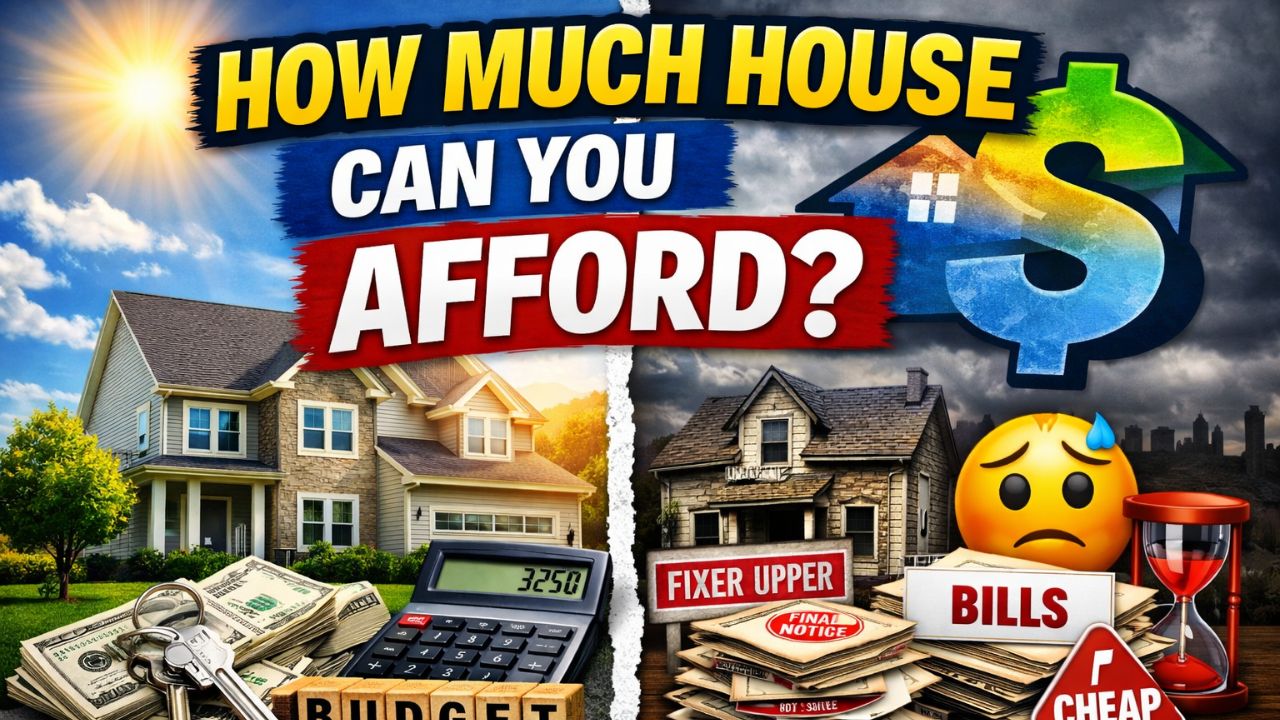
 ⭐ How Much House Can You Really Afford?
Buying a home is exciting — but it’s also one of the biggest financial commitments you’ll ever make. Many buyers focus on the listing price or what the lender says they can qualify for, but those numbers don’t always reflect what’s truly comfortable month to month. Understanding how much house you can really afford means looking beyond the mortgage approval and calculating your full monthly cost, including taxes, insurance, and other hidden expenses.
Let’s break down how to find your real affordability range — and how to use Our mortgage calculator to make smarter decisions.
1. The Difference Between “Approved” and “Affordable”
When a lender pre‑approves you for a mortgage, they’re telling you the maximum amount you can borrow based on your income, debt, and credit score. But that doesn’t mean you should borrow that much.
Lenders use formulas like the 28/36 rule, which says:
- Your mortgage payment (including taxes and insurance) shouldn’t exceed 28% of your gross monthly income.
- Your total debt payments (including car loans, credit cards, etc.) shouldn’t exceed 36% of your income.
These ratios are helpful, but they don’t account for your lifestyle, savings goals, or comfort level. A lender might approve you for a $500,000 home, but if that payment leaves you stressed every month, it’s not truly affordable.
2. Why Monthly Payment Matters More Than Home Price
Homebuyers often shop by price — but your monthly payment is what determines affordability. Two homes with the same price can have very different payments depending on interest rate, property taxes, insurance, and HOA fees.
For example:
- A $400,000 home at 6.5% interest might cost $2,528/month (P&I).
- Add $300 for taxes, $150 for insurance, and $100 for HOA fees — your total payment becomes $3,078/month.
That’s a big difference from the base mortgage alone. Always use a full PITI calculator (Principal, Interest, Taxes, and Insurance) to see your true monthly cost.
3. Don’t Forget About Property Taxes and Insurance
Property taxes and homeowners insurance vary widely by location. A home in one county might have $3,000/year in taxes, while another has $6,000/year. Insurance costs also depend on local risk factors like hurricanes, floods, or wildfires.
These costs can easily add $200–$500 per month to your payment. Ignoring them is one of the most common mistakes buyers make. A good mortgage calculator lets you input estimated taxes and insurance so you can see the full picture.
4. The Hidden Impact of PMI and HOA Fees
If your down payment is less than 20%, you’ll likely pay Private Mortgage Insurance (PMI) until you reach 20% equity. PMI can add $100–$300 per month depending on your loan size and credit score.
Homeowners Association (HOA) fees are another hidden cost. They can range from $50 to $500 per month depending on amenities and location. Always include these in your affordability calculation — they’re part of your monthly housing expense.
5. How Interest Rates Change Affordability
Interest rates have a huge effect on monthly payments. Even a small rate change can shift affordability dramatically.
Example:
- $400,000 loan at 6.0% = $2,398/month (P&I)
- $400,000 loan at 7.0% = $2,661/month (P&I)
That’s a $263 difference every month, or more than $3,000 per year.
If rates rise while you’re shopping, your buying power drops. Use your calculator to test different rate scenarios so you know how much cushion you have.
6. How to Use a Mortgage Calculator to Find Your Comfort Zone
A mortgage calculator isn’t just a math tool — it’s a decision‑making tool. Here’s how to use it effectively:
- Enter your target home price.
- Adjust the down payment. See how 5%, 10%, or 20% changes your monthly cost.
- Test different interest rates. Try 6%, 6.5%, and 7% to see how sensitive your payment is.
- Add taxes, insurance, PMI, and HOA fees. This gives you your full PITI payment.
- Compare the total to your monthly income. Aim to stay below 28% of gross income for comfort.
This process helps you find your true affordability range — not just what the lender says you can borrow.
7. The Emotional Side of Affordability
Affordability isn’t just about numbers — it’s about peace of mind. A home that fits your budget should also fit your lifestyle. If your mortgage payment leaves you anxious or limits your ability to save, it’s too high.
Many buyers find that staying slightly below their maximum approval amount gives them flexibility for maintenance, travel, or emergencies. The goal isn’t to buy the most expensive home you can — it’s to buy the one that feels financially comfortable.
8. Long‑Term Planning: Think Beyond the First Year
Your first year of homeownership often includes extra costs — moving, furniture, repairs, and maintenance. Plan for these expenses when calculating affordability.
Also consider future changes:
- Property taxes may rise.
- Insurance premiums can increase.
- Maintenance costs grow as the home ages.
Building a small buffer into your monthly budget helps you stay comfortable even as costs evolve.
How Much House Can You Really Afford: Final Thoughts
“How much house can you really afford?” isn’t just a question for your lender — it’s a question for your lifestyle. The smartest buyers look beyond approval numbers and focus on total monthly cost, long‑term stability, and emotional comfort.
Use your mortgage calculator to test different scenarios, include every cost, and find the payment that fits your life — not just your loan. When you understand your true affordability, you’ll buy with confidence and enjoy your home without financial stress.
Checkout other helpful pages Here on Our Mortgage Guides Page
Disclaimer: The information on this page is for educational purposes only and should not be considered financial or mortgage advice. Mortgage decisions depend on your personal financial situation, and you should always consult a licensed financial adviser, mortgage professional, or loan specialist before entering into any agreement.